5 min read
Has AI replaced software engineers?
93% of developers use AI, but productivity is only up about 10%. Here's what the data says about the "coding is dead" claim.
Everywhere you look, a CEO or an influencer is telling you that software engineering is solved and coding is dead.
In March 2025, Anthropic CEO Dario Amodei said AI would write 90% of developer code within 3 to 6 months, and essentially all of it within 12. From there, two arguments took off:
- AI makes engineers more efficient, so companies will need fewer of them.
- AI writes the code now, so there’s no point learning how to code.
I don’t think the data supports either one yet. Here’s why.
Demos aren’t real work
Every new AI launch comes with an impressive demo: someone builds a video game, a flashy website, or a whole app in a few minutes. You type a sentence and get a working app.
If that’s all you saw, you might reasonably believe software engineers are done. But a demo isn’t what happens inside a real software organization.
93% adoption, about 10% gains
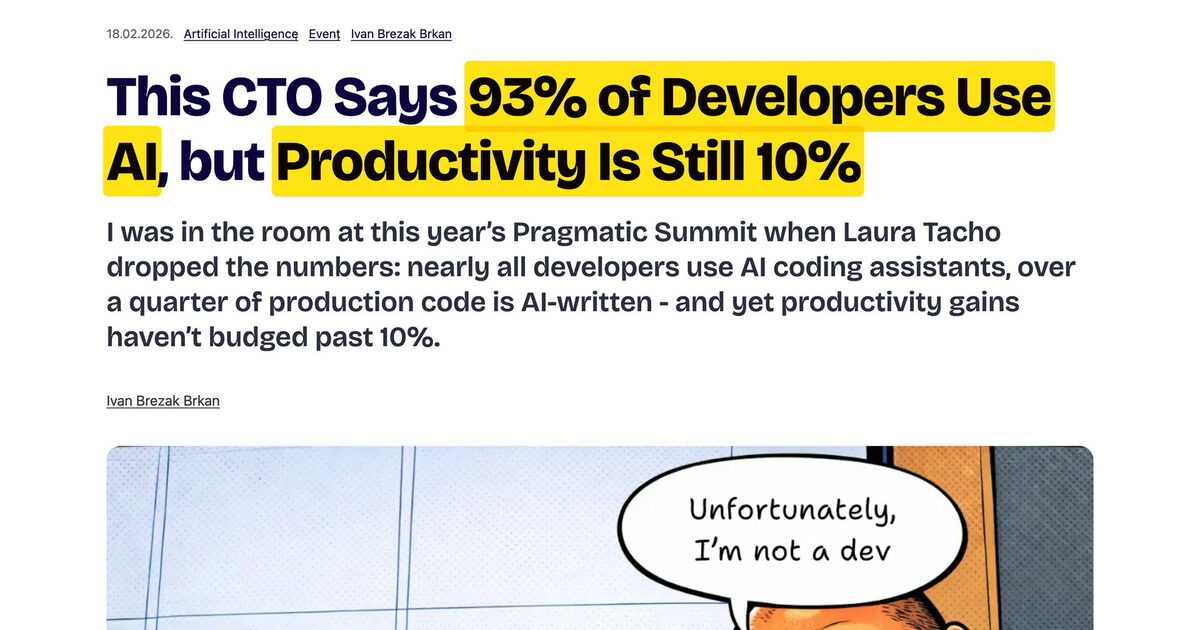
Laura Tacho, CTO at DX, has been studying how developers actually use AI at work. Their latest research found:
- Around 93% of developers use AI coding assistants
- AI-written code now makes up about 27% of production code
- Developers save only about 4 hours per week
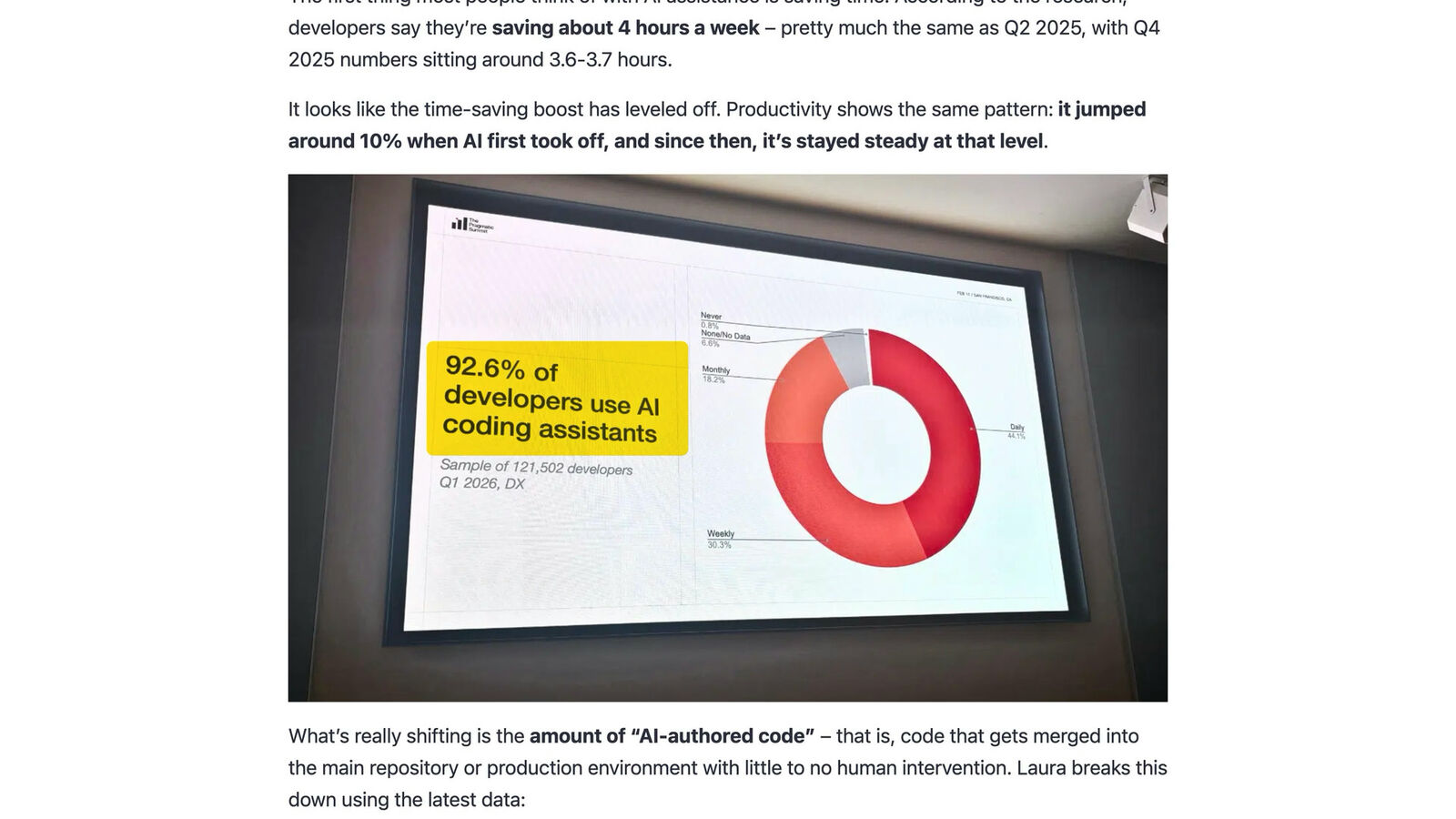
On a 40-hour week, that’s roughly a 10% time saving. That matches my experience. I use AI on personal and commercial projects, and I write far less code than I used to. But it doesn’t feel like something that replaces engineers.
Using AI is a very collaborative process. It needs constant input from the person using it. You still review pull requests and make sure what you merge doesn’t break things for everyone else. And when something goes wrong, nobody calls Claude into the incident meeting.
Left on its own, AI just sits there. Someone still has to direct the work, make decisions, and take responsibility for the outcome.
What about the layoffs?
It’s a fair question. If AI isn’t replacing engineers, why are Amazon, Google, and Meta cutting headcount?
Read what the CEOs actually said, and the story is about culture and changing business priorities, not AI that’s capable enough to replace engineers. Companies downsize for all kinds of reasons: restructuring, cutting management layers, the economy, overhiring, or moving money elsewhere.
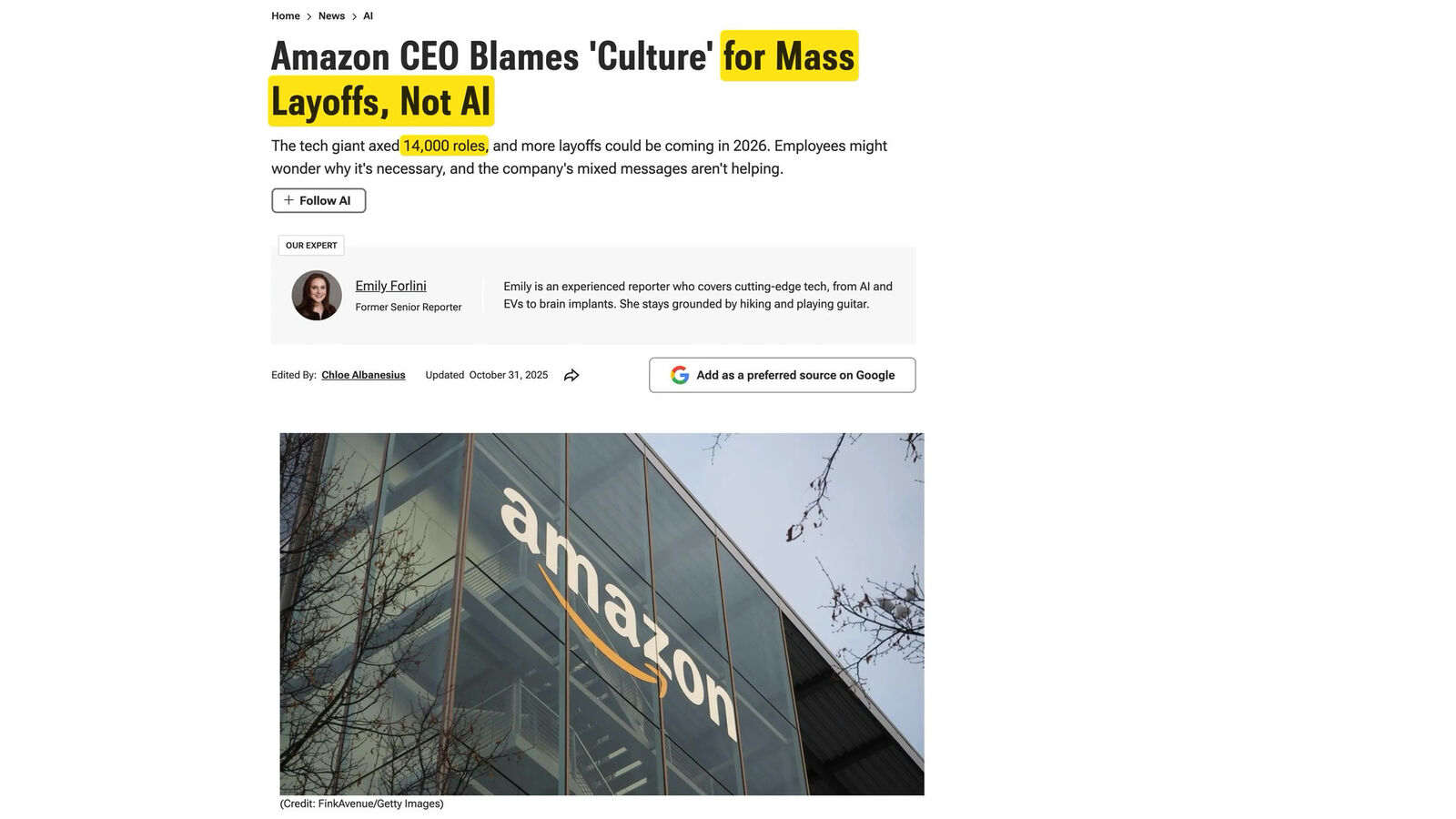
When Amazon announced 14,000 corporate layoffs in 2025, Andy Jassy said that round wasn’t financially driven or AI driven. It was about culture and removing layers after years of rapid growth. Meta and Google’s 2025 layoffs were about freeing up capital for AI development, not about AI replacing engineering talent.
So seeing “10,000 tech workers laid off” and concluding that “AI replaced 10,000 engineers” is a much bigger leap than the data supports.
The job forecast is still growing
The US Bureau of Labor Statistics projects software developer jobs to grow from about 1.69 million in 2024 to 1.96 million in 2034. That’s a 15.8% increase, or about 267,700 additional jobs.
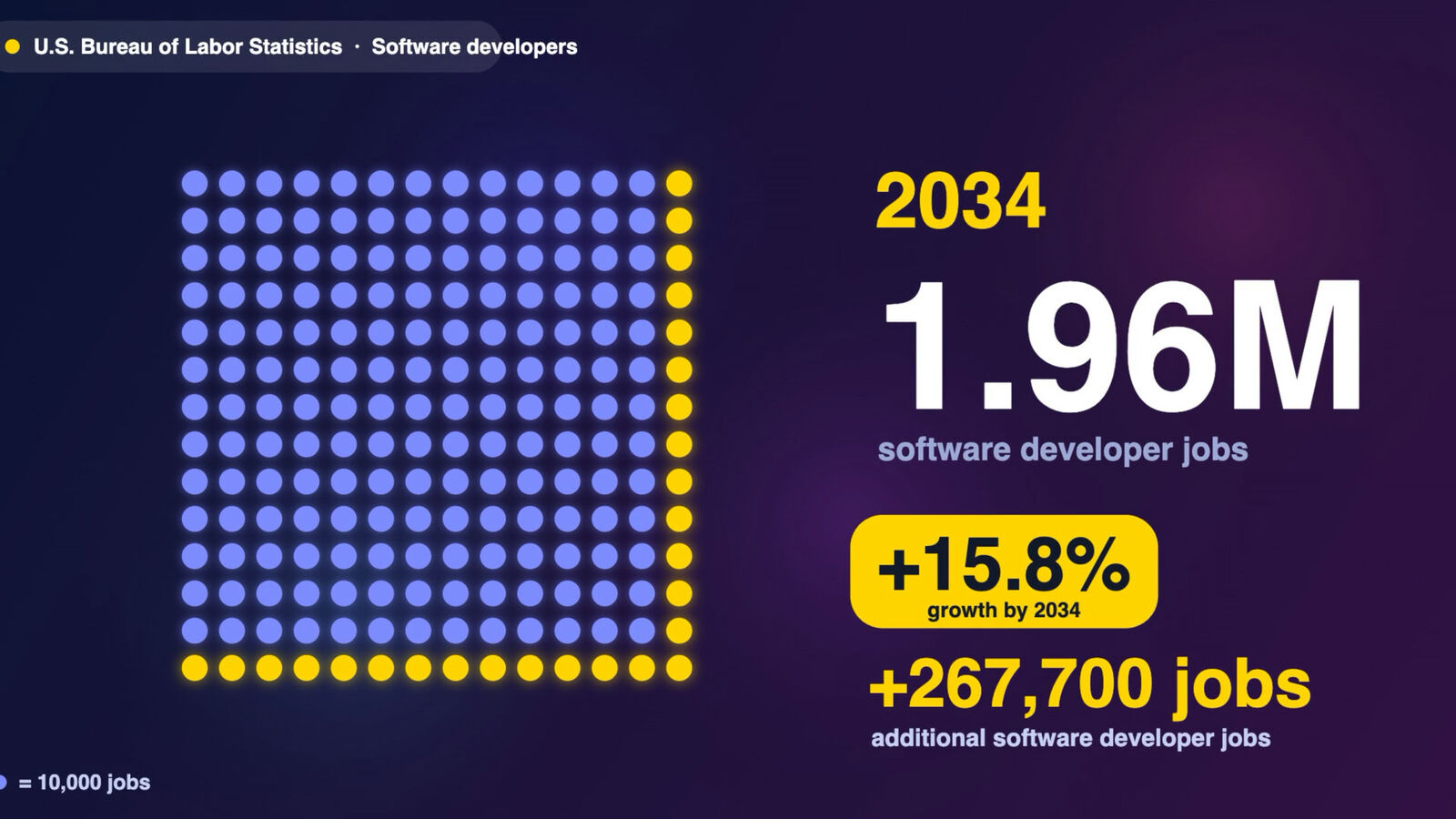
A projection isn’t a promise, and it doesn’t mean nobody will lose their job. But the official forecast doesn’t describe a profession that’s being erased.
And if AI makes building software cheaper and faster, demand probably goes up, not down. Companies have reasons to build more products, enter more markets, and take on projects that weren’t economical before. Some will use the efficiency gains to cut headcount, and I expect that to happen in some areas. But that’s very different from “AI can code, so engineers aren’t needed.”
Cisco, for example, still has around 18,000 engineers using Codex daily. If AI could really replace them, Cisco would be very interested in finding out.
The AI labs are still hiring engineers
This is the data point I find most interesting. Anthropic, the company behind Claude, is still hiring software engineers, and their interview process looks a lot like a traditional one.
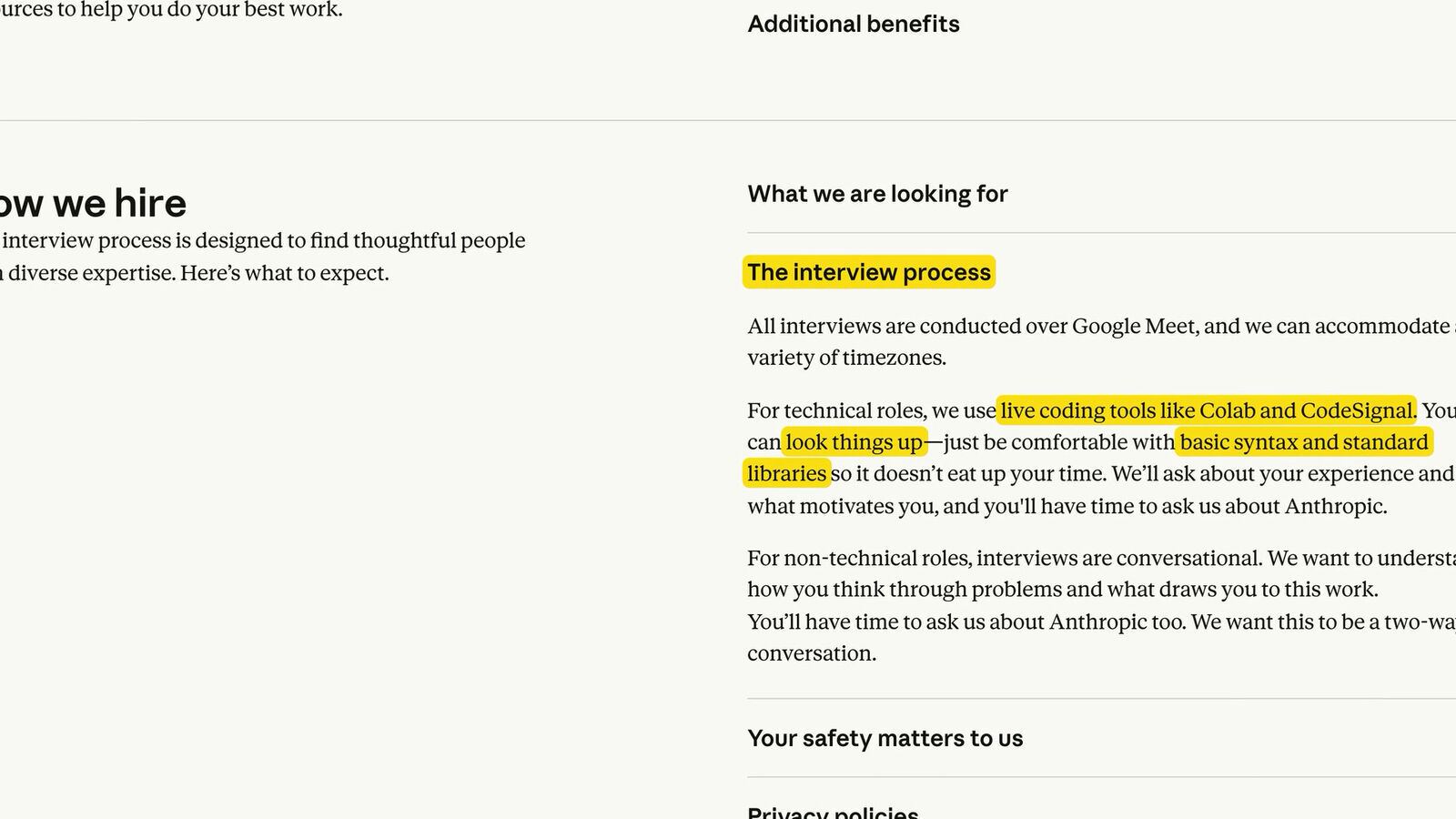
According to their careers page, technical candidates solve programming problems and are expected to write, run, and debug their solutions. You can look things up, but they expect you to know basic syntax, standard libraries, and common patterns. They also say they care about how you think through problems and weigh trade-offs.
One Reddit user who interviewed for an L4 role described questions on concurrency, async processing, debugging performance problems, system design, fault tolerance, observability, and scalability.
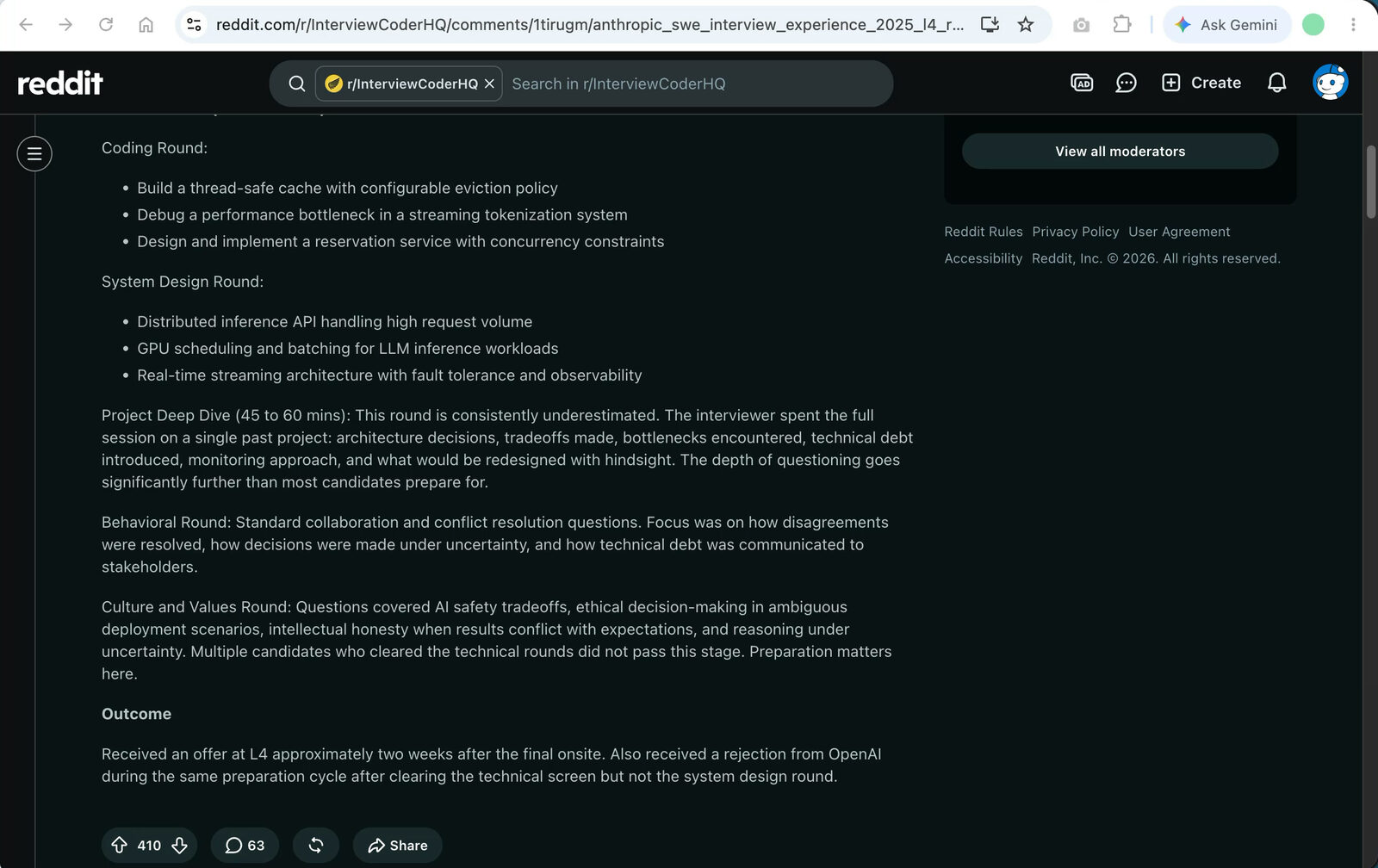
That’s one person’s experience, not the official process. But nobody is being asked “how good are you at prompting Claude?” or “how many hours a day do you use Claude Code?” Reports on OpenAI’s interviews look similar.
So if the companies building the best coding AI believe coding is dead, why are they paying to hire people who understand how software works?
Probably for the same reason you would. If you need robust, reliable software, would you hire someone who only knows AI, or someone who knows software engineering and AI?
Learn to code, with AI
I find it strange when people say “don’t learn to code, just learn AI.” Learning both is obviously better than learning one.
AI also makes learning faster. In the same DX research, AI cut developer onboarding time roughly in half across a sample of 3,500 developers. I think that applies to learning programming too. If the basics used to take two years, AI might get you there in one. You don’t need to grind through a 90-hour course before building your own projects.
The short version
- AI is here to stay. It’s already writing about 27% of production code, and that number will keep growing.
- The layoffs are real, but they aren’t proof that AI is replacing engineers. Companies always go through layoff and rehire cycles, and rehiring rarely makes the news.
- The AI labs still hire engineers and test for problem solving, not prompting.
The signal to watch isn’t headlines. It’s how companies around you actually hire. And right now, they still want people who can analyze requirements, understand the business, and make the right call.
So, has AI replaced software engineers? Not based on the data we have today. Learn the fundamentals well, because you’ll need them.
Hit reply and tell me what you think. I read every response.
Nathan